



Non-cleavable Linker
Non-cleavable linkers are critical structural components of antibody-drug conjugates (ADCs) because they maintain high plasma stability while controlling intracellular payload release through antibody degradation pathways rather than linker cleavage mechanisms[1][2]. Mechanistically, these linkers require antigen-mediated internalization followed by lysosomal proteolysis of the antibody component, generating active drug-linker-amino acid metabolites that remain associated with degradation products inside target cells[1][3]. This release process reduces premature systemic payload liberation and directly influences ADC pharmacokinetics, off-target toxicity, and therapeutic index[1][2]. In cancer models, non-cleavable linker-based ADCs are primarily effective in tumors with high and relatively homogeneous target-antigen expression because payload release depends on efficient intracellular processing after target engagement[4]. Compared with cleavable linker systems, non-cleavable linkers generally produce limited bystander killing activity because the released metabolites often display reduced membrane permeability, thereby restricting cytotoxic activity to antigen-positive cells[4][1]. This distinction is particularly important for experimental ADC design, where linker selection must balance tumor heterogeneity, systemic exposure, and safety requirements[2]. For research applications, thioether-based non-cleavable linkers such as succinimidyl-4-(N-maleimidomethyl)cyclohexane-1-carboxylate (SMCC) remain widely used because they provide robust circulatory stability and have been clinically validated in trastuzumab emtansine (T-DM1)[1][3].
References:
- [1]. Fu Z, et al. Antibody drug conjugate: the \"biological missile\" for targeted cancer therapy. Signal Transduct Target Ther. 2022 Mar 22;7(1):93. [Content Brief]
- [2]. Fu K, et al. 2,6-diazaspiro[3.4]octan-7-one derivatives as potent sigma-1 receptor antagonists that enhanced the antinociceptive effect of morphine and rescued morphine tolerance. Eur J Med Chem. 2023 Mar 5;249:115178. [Content Brief]
- [3]. Diamantis N, et al. Antibody-drug conjugates--an emerging class of cancer treatment. Br J Cancer. 2016 Feb 16;114(4):362-7. [Content Brief]
- [4]. Staudacher AH, et al. Antibody drug conjugates and bystander killing: is antigen-dependent internalisation required? Br J Cancer. 2017 Dec 5;117(12):1736-1742. [Content Brief]
-
Non-cleavable Linker Related Products (205)
Related Products (205)

-
Sulfo-SMCC sodium
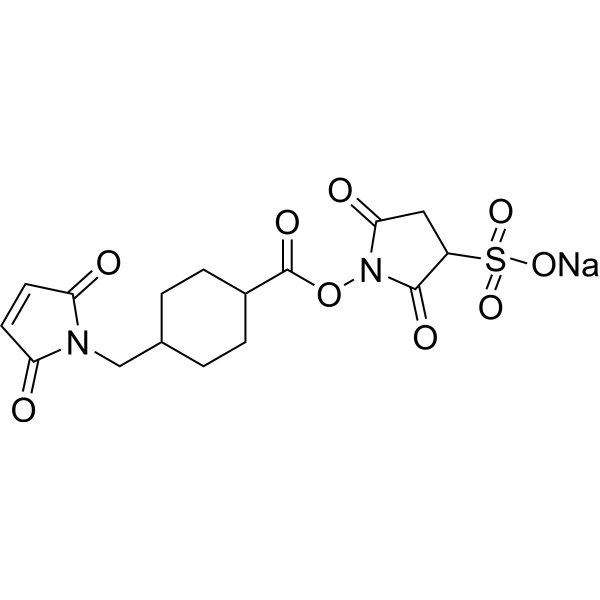 0 ImagesSulfo-SMCC sodium is a commonly used hetero-bifunctional, noncleavable ADC crosslinker bearing N-hydroxysuccinimide (NHS) ester and maleimide groups to react with primary amines and sulfhydryl groups, respectively.
-
DBCO-NHS ester
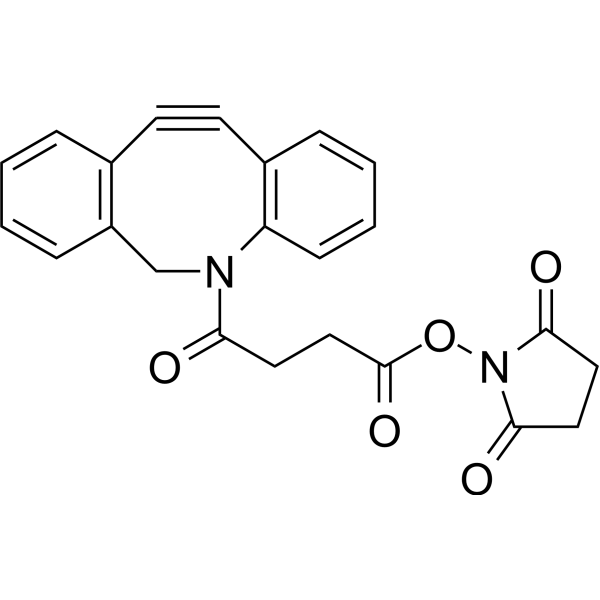 0 ImagesDBCO-NHS ester is a non-cleavable ADC linker used in the synthesis of antibody-drug conjugates (ADCs). DBCO-NHS ester is a click chemistry reagent, it contains a DBCO group that can undergo strain-promoted alkyne-azide cycloaddition (SPAAC) with molecules containing Azide groups.
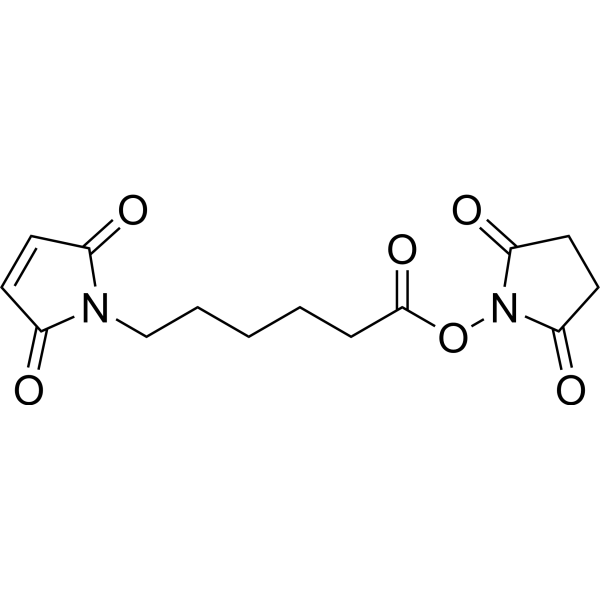
-
N-Hydroxysulfosuccinimide sodium
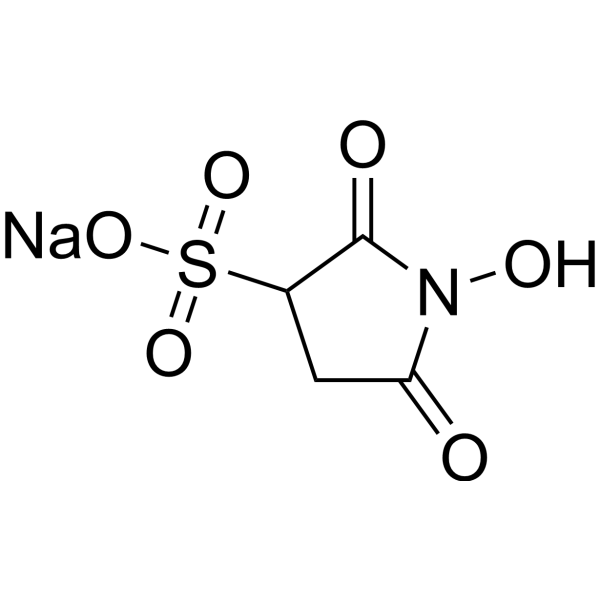 0 ImagesN-Hydroxysulfosuccinimide (sodium) is a non-cleavable ADC linker used in the synthesis of antibody-drug conjugates (ADCs).
-
Azido-PEG2-C2-amine
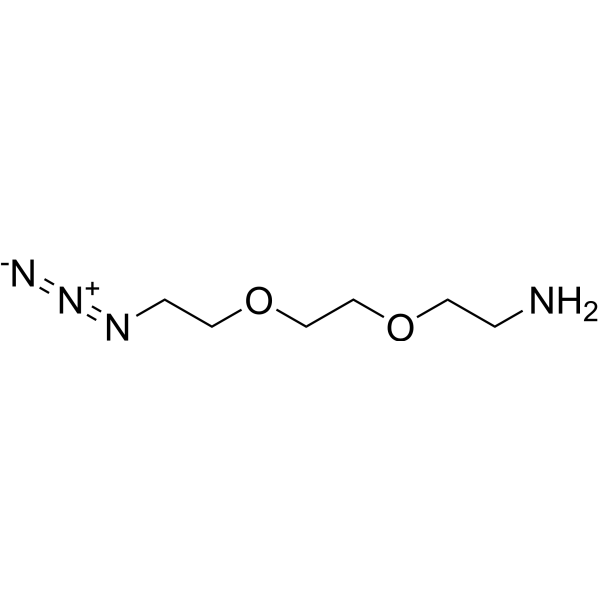 0 ImagesCat. No.: HY-140213CAS No.: 166388-57-4Synonyms: N3-PEG2-CH2CH2NH2Azido-PEG2-C2-amine (N3-PEG2-CH2CH2NH2) is a PEG-based PROTAC linker that can be used in the synthesis of PROTACs. Azido-PEG2-C2-amine is also a non-cleavable 2 unit PEG ADC linker used in the synthesis of antibody-drug conjugates (ADCs). Azido-PEG2-C2-amine is a click chemistry reagent, it contains an Azide group and can undergo copper-catalyzed azide-alkyne cycloaddition reaction (CuAAc) with molecules containing Alkyne groups. It can also undergo strain-promoted alkyne-azide cycloaddition (SPAAC) reactions with molecules containing DBCO or BCN groups.
-
Eicosanedioic acid
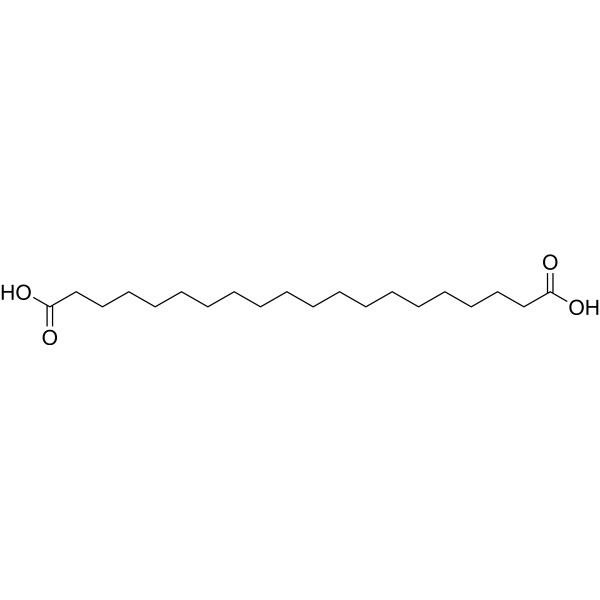 0 ImagesEicosanedioic acid is a non-cleavable ADC linker used in the synthesis of antibody-drug conjugates (ADCs). Eicosanedioic acid is also a alkyl chain-based PROTAC linker that can be used in the synthesis
-
Azetidin-3-ol hydrochloride
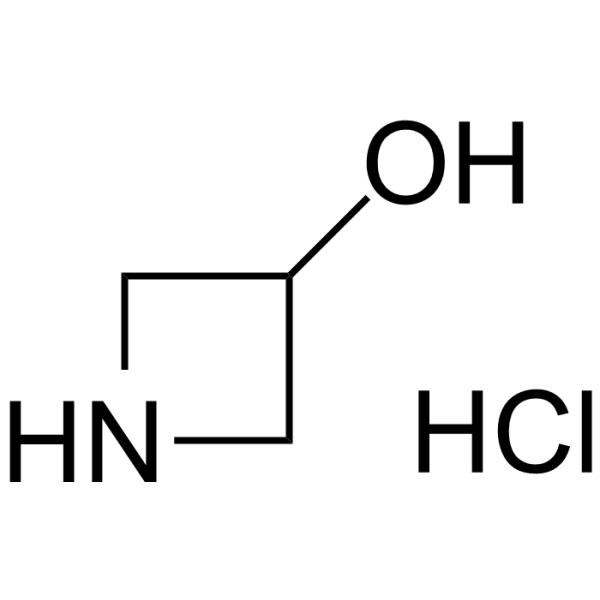 0 ImagesAzetidin-3-ol hydrochloride is a non-cleavable ADC linker used in the synthesis of antibody-drug conjugates (ADCs). Azetidin-3-ol hydrochloride is also a alkyl chain-based PROTAC linker that can be used in the synthes PROTAC.
-
N3-PEG4-C2-NHS ester
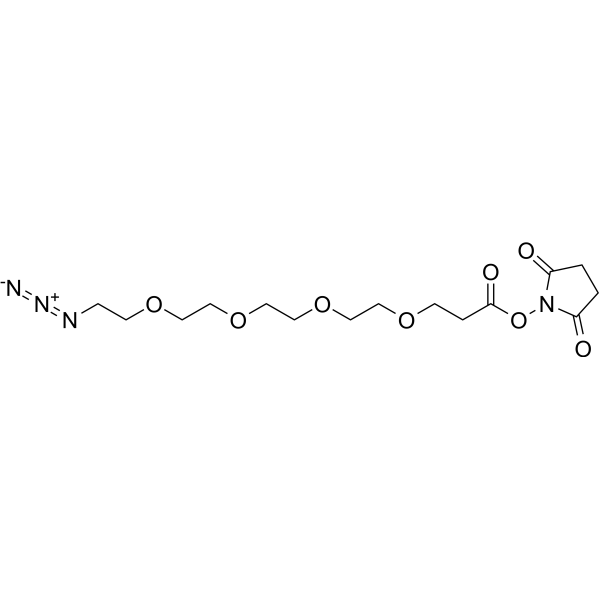 0 ImagesN3-PEG4-C2-NHS ester is a nonclaevable 4-unit PEG linker used in the synthesis of antibody-drug conjugates (ADCs). N3-PEG4-C2-NHS ester is a click chemistry reagent, it contains an Azide group and can undergo copper-catalyzed azide-alkyne cycloaddition reaction (CuAAc) with molecules containing Alkyne groups. It can also undergo strain-promoted alkyne-azide cycloaddition (SPAAC) reactions with molecules containing DBCO or BCN groups.
-
Maleimide-DOTA
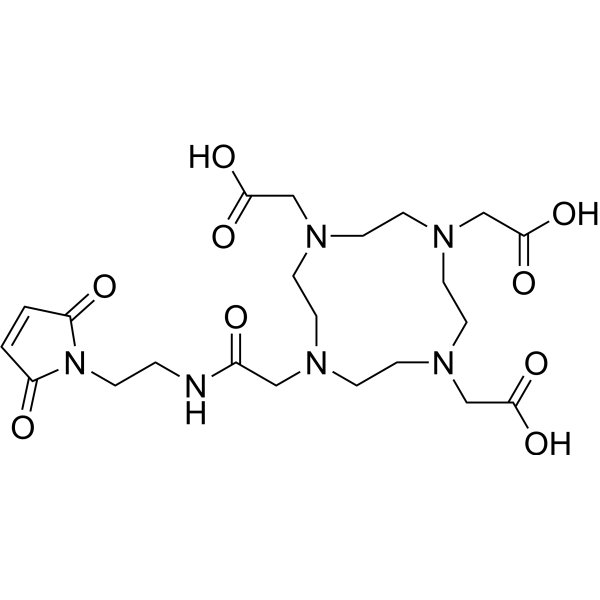 0 ImagesSynonyms: Maleimido-mono-amide-DOTAMaleimide-DOTA is a non-cleavable ADC linker used in the synthesis of antibody-drug conjugates (ADCs).
-
DBCO-PEG4-Maleimide
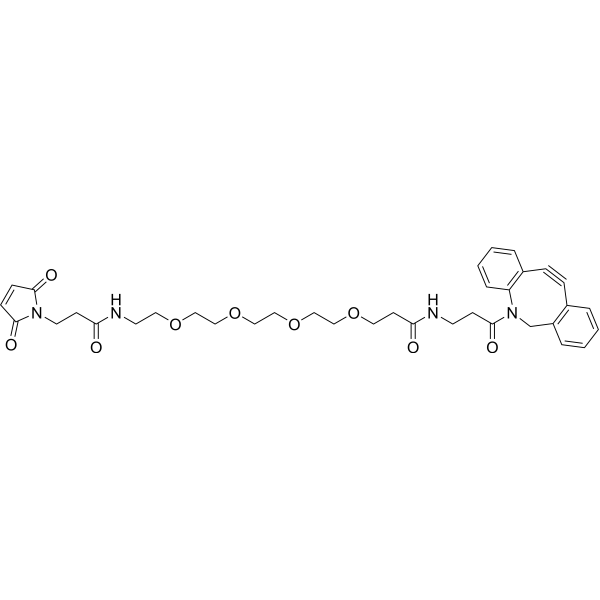 0 ImagesCat. No.: HY-120770CAS No.: 1480516-75-3DBCO-PEG4-Maleimide is a non-cleavable ADC linker used in the synthesis of antibody-drug conjugates (ADCs). DBCO-PEG4-Maleimide is a click chemistry reagent, it contains a DBCO group that can undergo strain-promoted alkyne-azide cycloaddition (SPAAC) with molecules containing Azide groups.
-
Mal-PEG4-NHS ester
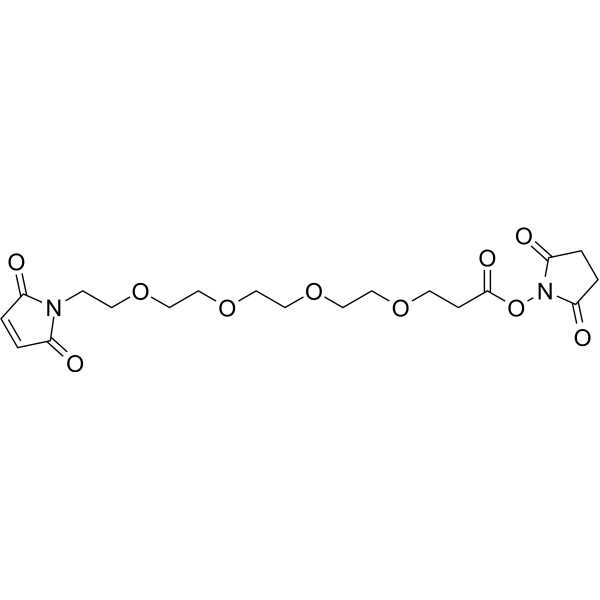 0 ImagesMal-PEG4-NHS ester is a non-cleavable ADC linker which links Quantum dots (QDs) with PEGylated liposomes.
-
DBCO-NHS ester 2
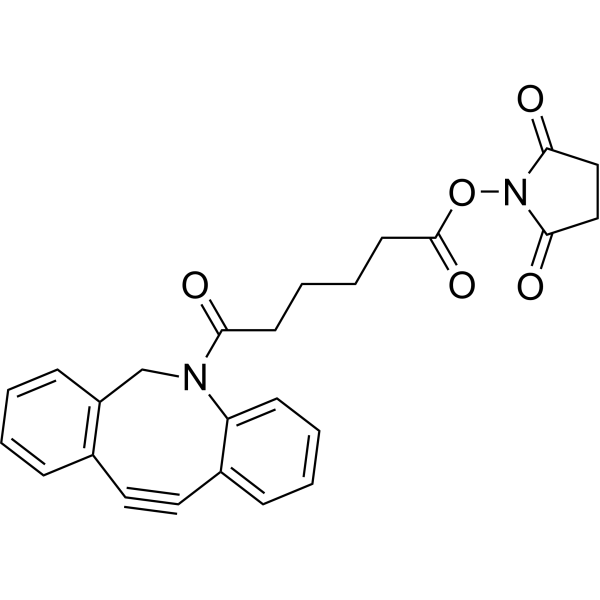 0 ImagesDBCO-NHS ester 2 is a cleavable linker that is used for making antibody-drug conjugate (ADC). DBCO-NHS ester 2 is a derivative of Dibenzylcyclooctyne (DBCO) used in copper-free click chemistry[1]. DBCO-NHS ester 2 is a click chemistry reagent, it contains a DBCO group that can undergo strain-promoted alkyne-azide cycloaddition (SPAAC) with molecules containing Azide groups.
-
DBCO-Maleimide
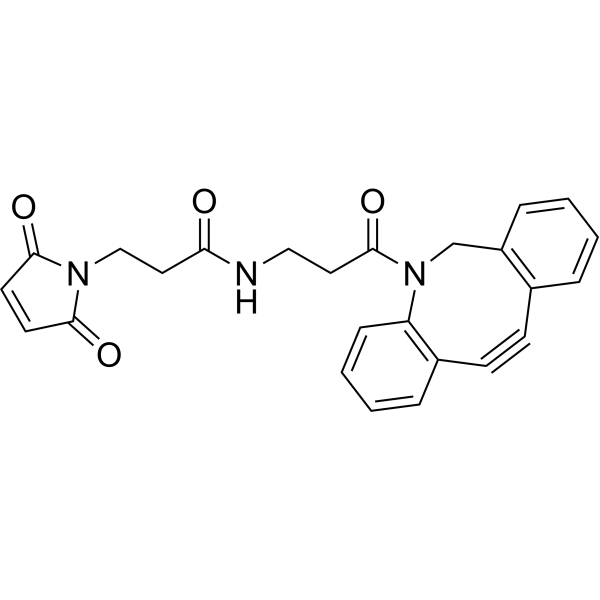 0 ImagesDBCO-Maleimide is a non-cleavable ADC linker used in the synthesis of antibody-drug conjugates (ADCs). DBCO-Maleimide is a click chemistry reagent, it contains a DBCO group that can undergo strain-promoted alkyne-azide cycloaddition (SPAAC) with molecules containing Azide groups.
-
Mal-PEG2-NHS ester
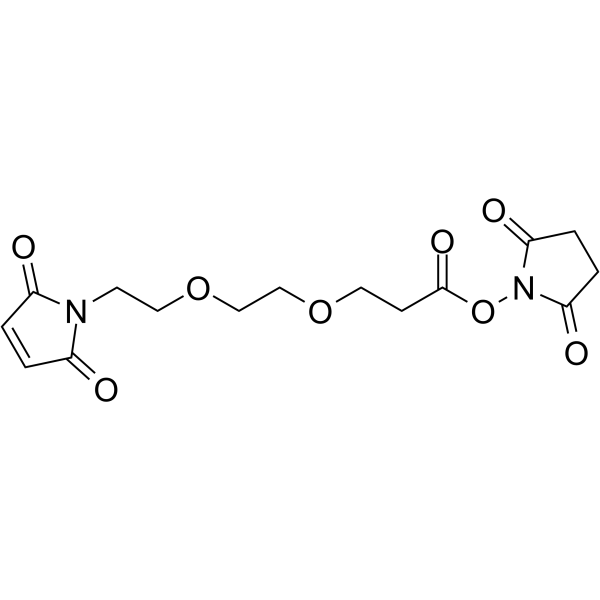 0 ImagesMal-PEG2-NHS ester is a nonclaevable ADC linker containing a Maleimide group, 2-unit PEG and an NHS ester.
-
Bromo-PEG2-C2-azide
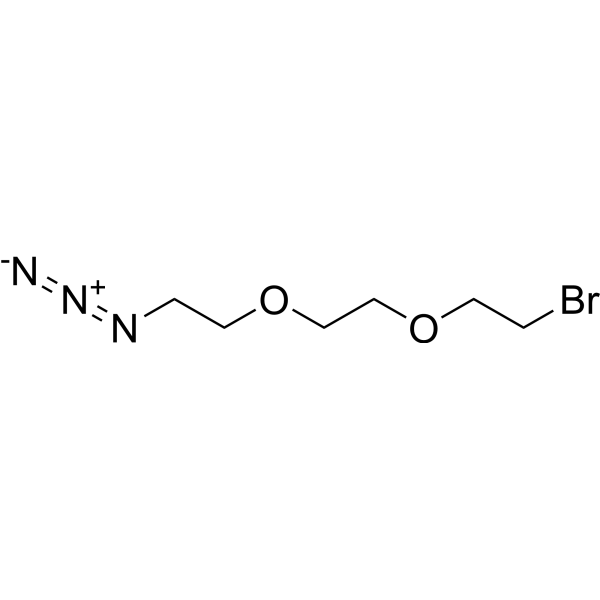 0 ImagesBromo-PEG2-C2-azide is a non-cleavable ADC linker used in the synthesis of antibody-drug conjugates (ADCs). Bromo-PEG2-C2-azide is also a PEG-based PROTAC linker that can be used in the synthesis of PROTACs. Bromo-PEG2-C2-azide is a click chemistry reagent, it contains an Azide group and can undergo copper-catalyzed azide-alkyne cycloaddition reaction (CuAAc) with molecules containing Alkyne groups. It can also undergo strain-promoted alkyne-azide cycloaddition (SPAAC) reactions with molecules containing DBCO or BCN groups.
-
BMPS
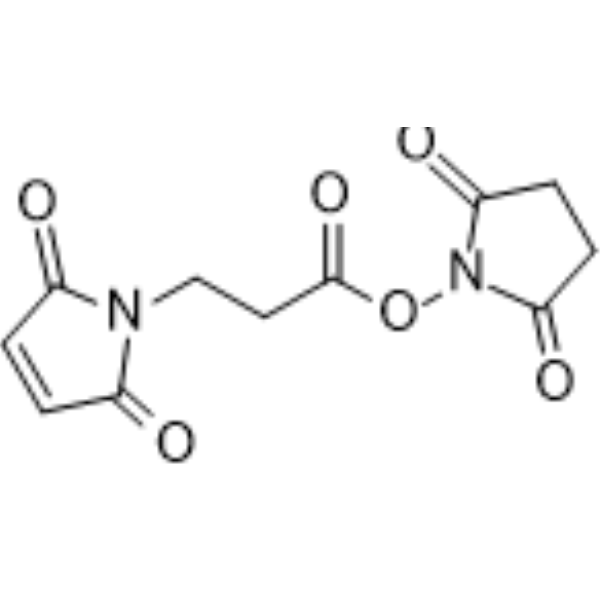 0 ImagesBMPS is a nonclaevable ADC linker used in the synthesis of antibody-drug conjugates (ADCs).
-
N3-PEG3-CH2CH2COOH
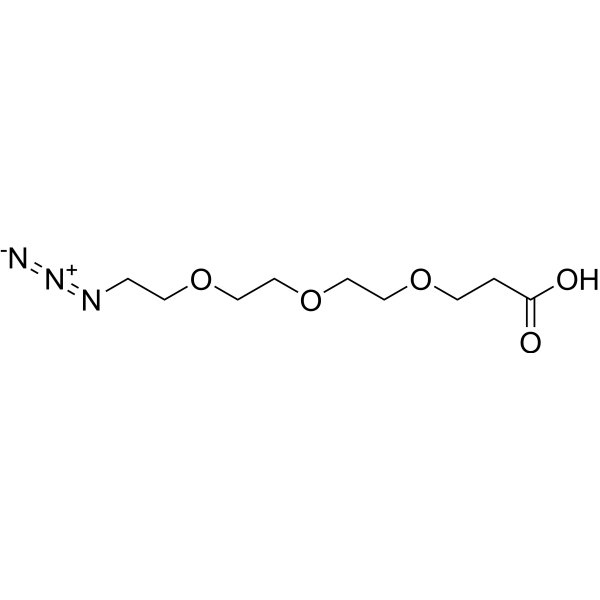 0 ImagesN3-PEG3-CH2CH2COOH a PEG-based PROTAC linker can be used in the synthesis of BI-3663 (HY-111546), BI-4216 and BI-0319. Azido-PEG3-acid is also a non-cleavable 3 unit PEG ADC linker used in the synthesis of antibody-drug conjugates (ADCs). N3-PEG3-CH2CH2COOH is a click chemistry reagent, it contains an Azide group and can undergo copper-catalyzed azide-alkyne cycloaddition reaction (CuAAc) with molecules containing Alkyne groups. It can also undergo strain-promoted alkyne-azide cycloaddition (SPAAC) reactions with molecules containing DBCO or BCN groups.
-
Vipivotide tetraxetan Ligand-Linker Conjugate
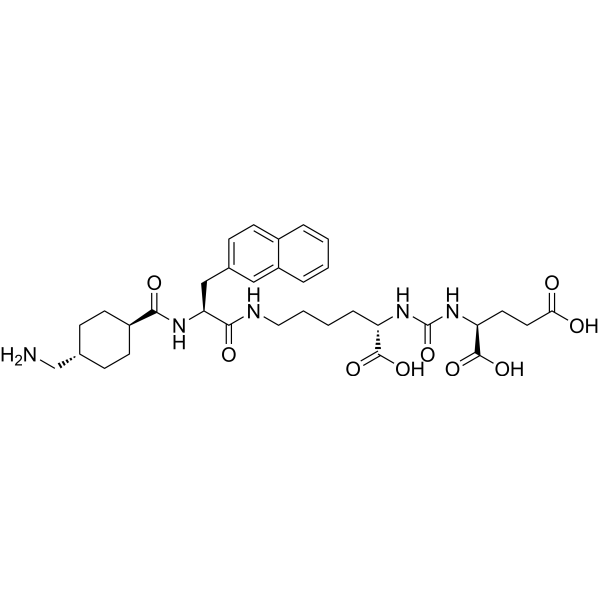 0 ImagesSynonyms: PSMA-617 Ligand-Linker ConjugateVipivotide tetraxetan Ligand-Linker Conjugate (PSMA-617 Ligand-Linker Conjugate) is a complex composed of pharmacophore group Glutamate-urea-Lysine peptide coupling linker, which can be used to synthesize Vipivotide tetraxetan (PSMA-617). Glutamate-urea-Lysine selectively binds to prostate-specific membrane antigen (PSMA).
-
N3-PEG2-C2-NHS ester
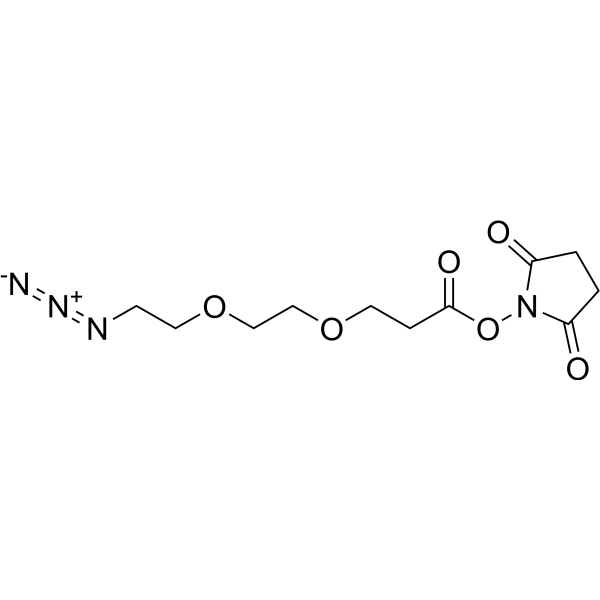 0 ImagesCat. No.: HY-126526CAS No.: 1312309-64-0N3-PEG2-C2-NHS ester is a nonclaevable 2-unit PEG linker used in the synthesis of antibody-drug conjugates (ADCs). N3-PEG2-C2-NHS ester is a click chemistry reagent, it contains an Azide group and can undergo copper-catalyzed azide-alkyne cycloaddition reaction (CuAAc) with molecules containing Alkyne groups. It can also undergo strain-promoted alkyne-azide cycloaddition (SPAAC) reactions with molecules containing DBCO or BCN groups.



